Quick answer
- Best overall: Segway Navimow i2 AWD (opens in a new tab). Wire-free, AWD, and fairly priced.
- Best for hills and big lawns: Mammotion LUBA 3 AWD (opens in a new tab).
- Best for 1+ acre: Segway Navimow X4 (opens in a new tab).
- Best for yards with lots of trees: Ecovacs GOAT O1000 LiDAR PRO (opens in a new tab) (no satellite signal needed).
- Best premium, proven brand: Husqvarna Automower 430X NERA (opens in a new tab).
Our top robot lawn mowers at a glance
| Model | Navigation | Lawn size | Slopes | Launch price | |
|---|---|---|---|---|---|
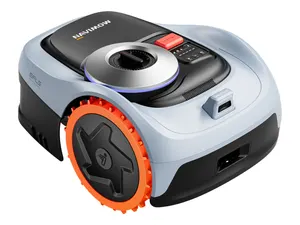 Navimow i2 AWD | Network RTK + vision | 0.15–0.25 acre | up to 45% (24°) | from about $999 | Check price (opens in a new tab) |
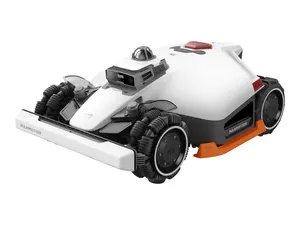 LUBA 3 AWD | LiDAR + RTK + vision ("Tri-Fusion") | 1,500–5,000 m² (0.37–1.2 acres) by version | built for steep, rough lawns | from about $2,399 | Check price (opens in a new tab) |
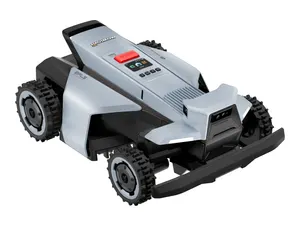 Navimow X4 | RTK + vision | 1–1.5 acres | up to 84% (40°) maker-rated | from about $2,499 | Check price (opens in a new tab) |
| Automower 430X NERA | Boundary wire or EPOS satellite (with add-on) | up to 0.8 acre | up to 45% (24°) | premium (around $3,000+ with EPOS kit) | Check price (opens in a new tab) |
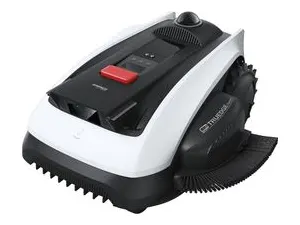 GOAT O1000 LiDAR PRO | LiDAR (no RTK antenna) | up to about 1,000 m² (0.25 acre) | moderate | about $999–$1,499 | Check price (opens in a new tab) |
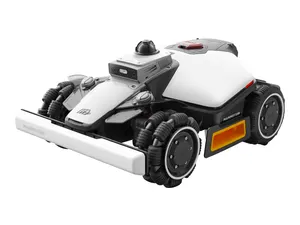 LUBA mini 2 AWD | 360° LiDAR + cameras | up to about 0.37 acre (1500H) | AWD for uneven ground | mid-range (roughly $1,500–$1,900 by version) | Check price (opens in a new tab) |
| Landroid Vision | AI camera (no wire, no RTK) | 0.25 acre (4WD versions up to 1 acre) | up to 35–45% by model | about $1,000–$1,300 | Check price (opens in a new tab) |
| YUKA mini 2 | LiDAR + vision | small lawns | gentle slopes | about $1,399–$1,559 | Check price (opens in a new tab) |
Specs are the makers' own figures. Launch prices are maker list prices as of November 2026; Amazon prices change daily and are often lower.
How we chose
We don't accept free products or paid placements. We compared every current model from the major brands on the things that actually decide whether a robot mower works in your yard: how it navigates, how big and steep a lawn it can handle, how close it cuts to edges, how easy it is to set up, how good the app is, and what owners report after a full season. We weight long-term owner reports heavily, because a mower that works in a showroom and fails in month three is no bargain. Our full method is on how we review.
The best robot lawn mowers
Segway Navimow i2 AWD (i206 / i210)
Best overall (opens in a new tab)- Navigation
- Network RTK + vision
- Lawn size
- 0.15–0.25 acre
- Slopes
- up to 45% (24°)
Segway's Navimow brand has become the default recommendation for a reason: its mowers just work for most normal yards. The i2 AWD generation adds all-wheel drive, so it grips damp grass and climbs bumps that strand two-wheel-drive robots. It uses network RTK (satellite positioning corrected over the internet, so there's no separate antenna to install) plus a camera to help with obstacles and weak-signal spots. Setup is done by walking the mower around the edge once with the app.
Launch price: from about $999 (maker list price, November 2026; Amazon is often lower)
Pros
- No boundary wire or antenna to install
- AWD handles bumpy, damp lawns
- Excellent app and easy mapping
- Fair price for what you get
Cons
- Network RTK needs good phone/Wi-Fi coverage outdoors
- Sized for small to medium yards (up to about 0.25 acre)
Mammotion LUBA 3 AWD
Best for hills & rough lawns (opens in a new tab)- Navigation
- LiDAR + RTK + vision ("Tri-Fusion")
- Lawn size
- 1,500–5,000 m² (0.37–1.2 acres) by version
- Slopes
- built for steep, rough lawns
Mammotion's LUBA line built its reputation on steep, lumpy lawns that other robots can't handle, and the LUBA 3 AWD is the most capable yet. It combines LiDAR, RTK and cameras, so if one signal is weak, the others fill in. It is big, heavy and powerful, which is exactly what you want on a slope and exactly what you don't need on a flat postage-stamp lawn.
Launch price: from about $2,399 (maker list price, November 2026; Amazon is often lower)
Pros
- Superb traction on slopes and uneven ground
- Three navigation systems back each other up
- Versions up to about 1.2 acres
- Multi-zone mapping and no-go zones
Cons
- Expensive
- Large and heavy
- Overkill for small, flat yards
Segway Navimow X4 (X430 / X450)
Best for large yards (opens in a new tab)- Navigation
- RTK + vision
- Lawn size
- 1–1.5 acres
- Slopes
- up to 84% (40°) maker-rated
If you have an acre or more, the Navimow X4 is the model to beat. It covers up to 1–1.5 acres depending on version, has all-wheel drive with a maker rating up to 40° slopes, and uses RTK plus vision. It costs a lot, but compared with a ride-on mower and the hours you'd spend on it, the numbers can work out.
Launch price: from about $2,499 (maker list price, November 2026; Amazon is often lower)
Pros
- Covers 1–1.5 acres
- Very high slope rating
- Same easy Navimow app
Cons
- Premium price
- More than most suburban yards need
Husqvarna Automower 430X NERA
Best premium brand- Navigation
- Boundary wire or EPOS satellite (with add-on)
- Lawn size
- up to 0.8 acre
- Slopes
- up to 45% (24°)
Husqvarna invented the consumer robot mower and still sets the standard for build quality, quiet running and dealer support. The 430X NERA can run on a traditional boundary wire or go wire-free with Husqvarna's EPOS satellite system (an add-on). You pay a premium, but you also get a brand with a 30-year track record and local service.
Launch price: premium (around $3,000+ with EPOS kit) (maker list price, November 2026; Amazon is often lower)
Pros
- Proven reliability and quiet operation
- Dealer network for service and installation
- Wire or wire-free
Cons
- Expensive, especially with EPOS
- Wire-free needs extra hardware
Ecovacs GOAT O1000 LiDAR PRO
Best for tree-lined yards (opens in a new tab)- Navigation
- LiDAR (no RTK antenna)
- Lawn size
- up to about 1,000 m² (0.25 acre)
- Slopes
- moderate
Satellite-based mowers struggle under tree canopy and close to tall houses, because the sky is blocked. The Ecovacs GOAT O1000 LiDAR PRO sidesteps the problem entirely: it maps the yard with LiDAR, so it needs no antenna and no satellite view. That makes it a smart choice for shaded or enclosed yards.
Launch price: about $999–$1,499 (maker list price, November 2026; Amazon is often lower)
Pros
- No RTK antenna and no wire
- Works where GPS is poor
- Simple setup
Cons
- Small-to-medium lawns only
- Owner reports on long-term reliability are more mixed than Navimow
Mammotion LUBA mini 2 AWD
AWD on a budget (opens in a new tab)- Navigation
- 360° LiDAR + cameras
- Lawn size
- up to about 0.37 acre (1500H)
- Slopes
- AWD for uneven ground
The LUBA mini 2 AWD gives you much of the big LUBA's grip in a smaller, cheaper body. It navigates with 360° LiDAR and cameras, and it is one of the best-selling robot mowers on Amazon in the US.
Launch price: mid-range (roughly $1,500–$1,900 by version) (maker list price, November 2026; Amazon is often lower)
Pros
- AWD traction at a lower price
- LiDAR navigation, no antenna needed
Cons
- Smaller cutting width than flagships
- Not for large lawns
Worx Landroid Vision Cloud
Easiest setup- Navigation
- AI camera (no wire, no RTK)
- Lawn size
- 0.25 acre (4WD versions up to 1 acre)
- Slopes
- up to 35–45% by model
The Worx Landroid Vision uses an AI camera to recognise grass and stop at the edges, so there is no wire, no antenna and almost no setup. Put it on the lawn and it mows. The trade-off is less precise, map-free mowing and weaker performance where grass meets similar-looking ground.
Launch price: about $1,000–$1,300 (maker list price, November 2026; Amazon is often lower)
Pros
- Genuinely plug-and-mow
- No wire, no antenna, no mapping
- 3-year warranty on many models
Cons
- Random-ish mowing pattern
- Can be confused by patchy grass or ground cover
Mammotion YUKA mini 2
Best for small lawns- Navigation
- LiDAR + vision
- Lawn size
- small lawns
- Slopes
- gentle slopes
A compact, wire-free mower for small, simple lawns. It costs less than the LUBA range and still gives you app control, mapping and scheduling.
Launch price: about $1,399–$1,559 (maker list price, November 2026; Amazon is often lower)
Pros
- Compact and quiet
- Wire-free with app control
Cons
- Not for slopes or big yards
How to choose a robot lawn mower
1. Navigation: wire, RTK, LiDAR or camera?
This is the big decision. RTK mowers use satellite positioning accurate to a couple of centimetres. They're excellent in open yards but can lose signal under heavy trees. LiDAR mowers scan their surroundings with a laser and don't need a clear sky. Camera-only mowers are the simplest to set up but the least precise. Wired mowers are cheapest and reliable but take a day to install. We compare them in detail in RTK vs LiDAR robot mowers.
2. Lawn size
Makers quote a maximum area. Buy a model rated for at least 20–30% more than your actual lawn, so it can finish without running all day. Small yards should start with our best robot mowers for small yards; an acre or more needs a model from our large-lawn guide.
3. Slopes
Slope ratings are usually given as a percentage (45% is about 24°). If any part of your lawn is steep, look for all-wheel drive and read our best robot mowers for hills.
4. Yard layout
Multiple lawns, narrow side passages and lots of flower beds need good multi-zone mapping. See robot mowers for complex yards.
5. Edges, security and safety
No robot cuts perfectly to a wall, so plan for a quick trim with a string trimmer. Look for PIN codes, alarms and GPS tracking (see theft protection), and read about safety around kids, pets and wildlife.
Who should not buy a robot mower
If your lawn is mostly very steep banks, rough meadow, or long grass you only cut a few times a year, a robot mower is the wrong tool. They are built to trim a little, often. If you only care about the lowest cost, a basic push mower wins easily; compare the two in robot vs regular mower.
Specific needs? See our picks for homes with dogs, yards with trees, the accessories worth buying, and this week's Black Friday deals.
Our verdict
For most yards, the Segway Navimow i2 AWD is the easiest recommendation: no wire, good grip, a great app and a sensible price. Spend more on the Mammotion LUBA 3 if your lawn is steep or rough, or the Navimow X4 if it is big. If trees block the sky over much of your yard, choose the LiDAR-based Ecovacs GOAT.
Check price on Amazon (opens in a new tab)Prices change often on Amazon. Check the live price before you buy.
Frequently asked questions
What is the best robot lawn mower for most people?
For a typical suburban yard up to about a quarter acre, we recommend the Segway Navimow i2 AWD (opens in a new tab). It needs no boundary wire, has all-wheel drive for bumpy lawns, and costs far less than the premium flagships. Bigger or steeper yards should look at the Mammotion LUBA 3 or Navimow X4.
Do robot lawn mowers still need a boundary wire?
Not any more. Most new models use satellite positioning (RTK), LiDAR or cameras to know where the lawn ends. Wired models still exist and are cheaper and very reliable. Our wire-free guide explains the trade-offs.
How much should I spend on a robot mower?
Expect roughly $700–$1,300 for a good small-yard wire-free model, $1,500–$2,500 for mid-size or sloped lawns, and $2,500+ for an acre or more. See how much a robot lawn mower costs for the full picture, including installation and blades.
Are robot lawn mowers worth it?
For most people with a regular lawn and a busy schedule, yes. They keep grass consistently short, which looks better and crowds out weeds. Read are robot lawn mowers worth it? for the honest pros and cons.
How long do robot lawn mowers last?
A well-maintained robot mower typically lasts 5–10 years. The battery is the part that wears out first, usually after 3–5 seasons, and is replaceable on most models.